Exterior Cleaning Guide
Soft Wash vs Pressure Wash: Which Does Your Surface Need
The choice is not about how dirty something is. It is about whether the surface can take force, and whether the dirt is organic or not.
The choice is not about how dirty something is. It is about whether the surface can take force, and whether the dirt is organic or not.
Pressure washing uses water force to remove material physically. Soft washing uses low pressure and a cleaning solution to kill and release organic growth chemically. They are not stronger and weaker versions of the same thing, they solve different problems, and picking the wrong one either damages the surface or leaves the growth to come back.
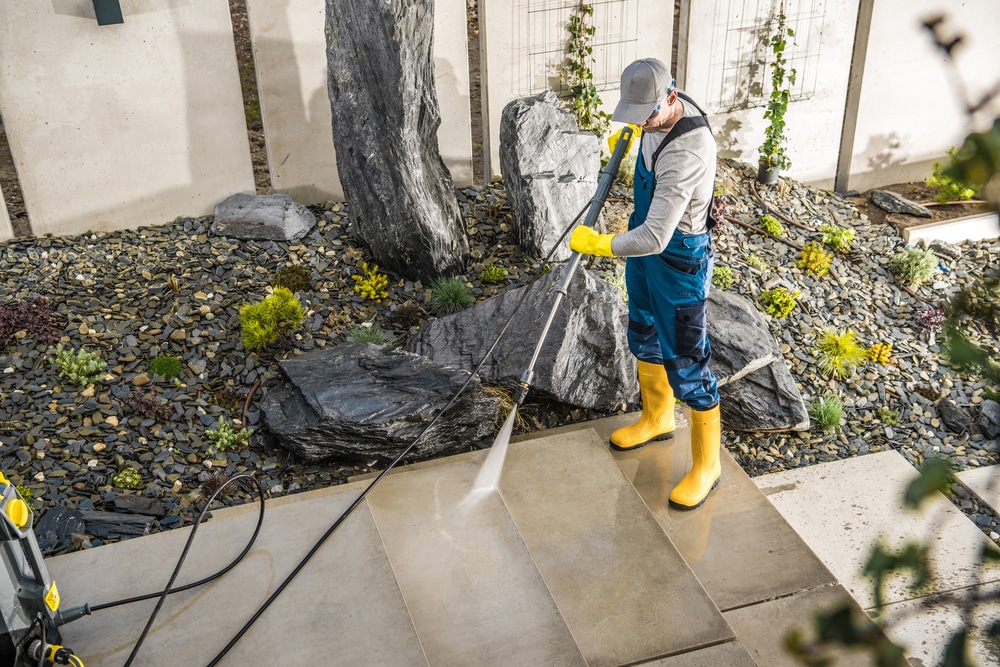
Hard, non-porous, structurally solid surfaces take pressure well: concrete driveways and slabs, brick paving, stone, parking areas, dumpster pads, and commercial hardstanding. The dirt on those is usually mineral or petrochemical, embedded traffic film, tyre marks, spilled grease. That does not respond to a cleaning solution, it needs mechanical energy and, for grease, hot water.
Even here, a surface cleaner beats a bare wand. It spreads force across a spinning bar so the slab dries evenly instead of in stripes, and it does far less damage to paver joints and mortar.
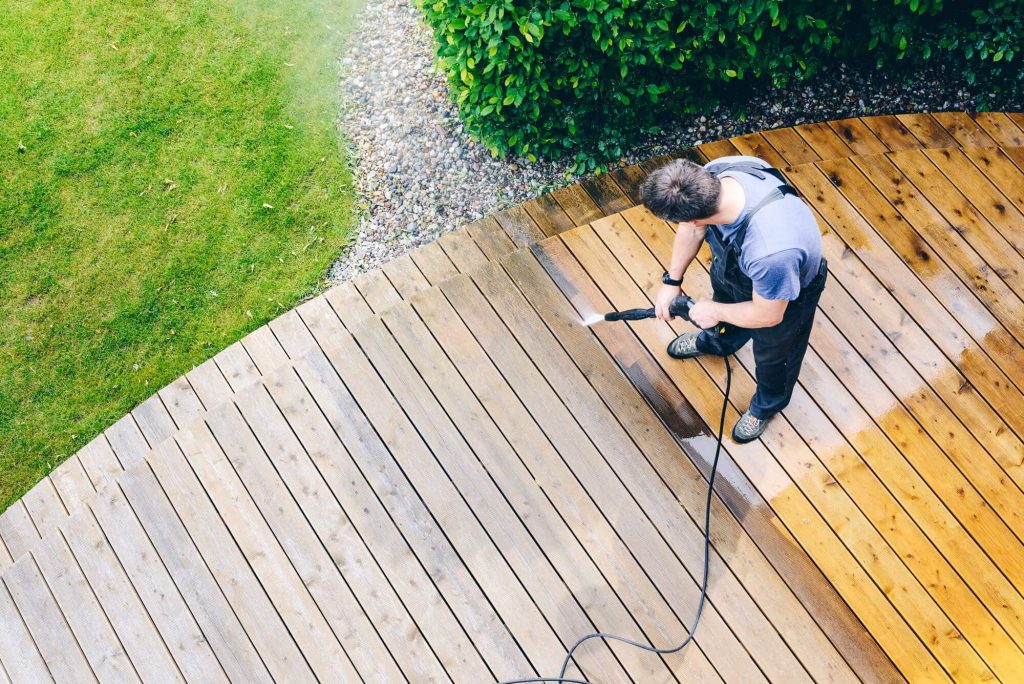
Anything that can hold water behind it, flex, or degrade needs a soft wash. Roof shingles, vinyl and painted wood siding, stucco, composite decking, screens, and older painted timber all fall here. So does anything where the stain is green or black, because that is living growth with roots in the surface. Blasting removes the visible layer and leaves the root system, which is why a pressure-washed roof or fence looks clean for a season and then goes dark again faster than you expect.
A soft wash kills the growth, so the surface stays clean considerably longer. That is the practical difference most people notice.
Roofs are where this matters most, because the cost of getting it wrong is highest. The dark streaking on asphalt shingles is a hardy algae. High pressure strips the protective granules off the shingle surface, which shortens the roof life measurably and can void a manufacturer warranty. It also drives water under the shingle courses. A roof is a soft wash surface, without exception in our work.
Ask two questions. Can this surface hold water behind it or be worn away by force? If yes, soft wash. Is the dirt green, black, or streaking in a way that returns each year? If yes, it is organic and needs a solution regardless of the surface. Only when the answer to both is no does straight pressure make sense.
Most houses need both in one visit: soft wash on the siding and roof, pressure on the drive and walkways, with the chemistry matched to each. Call (504) 688-3995 for a free written estimate.
Surface area is only part of it. The method a surface requires usually moves the number…
Read the guideIn a humid climate the answer is driven by shade and tree cover far more than…
Read the guideGreen film and black spotting on siding are two different organisms, and the black one does…
Read the guideFree written estimate before any work starts.