


Call Us (504) 688-3995
Call Us (504) 688-3995

Quick Answer: Mold and mildew on driveways respond to a sodium hypochlorite mix (12.5% pool shock diluted 1:4 with water) applied via pump sprayer, dwelled 10 minutes, then rinsed. Oil stains need a different approach, absorb fresh oil with cat litter, then use an alkaline degreaser with stiff-brush agitation. The most important rule: never mix bleach-based cleaners with degreaser, and never blast oil with high pressure (it drives the stain deeper into the concrete).
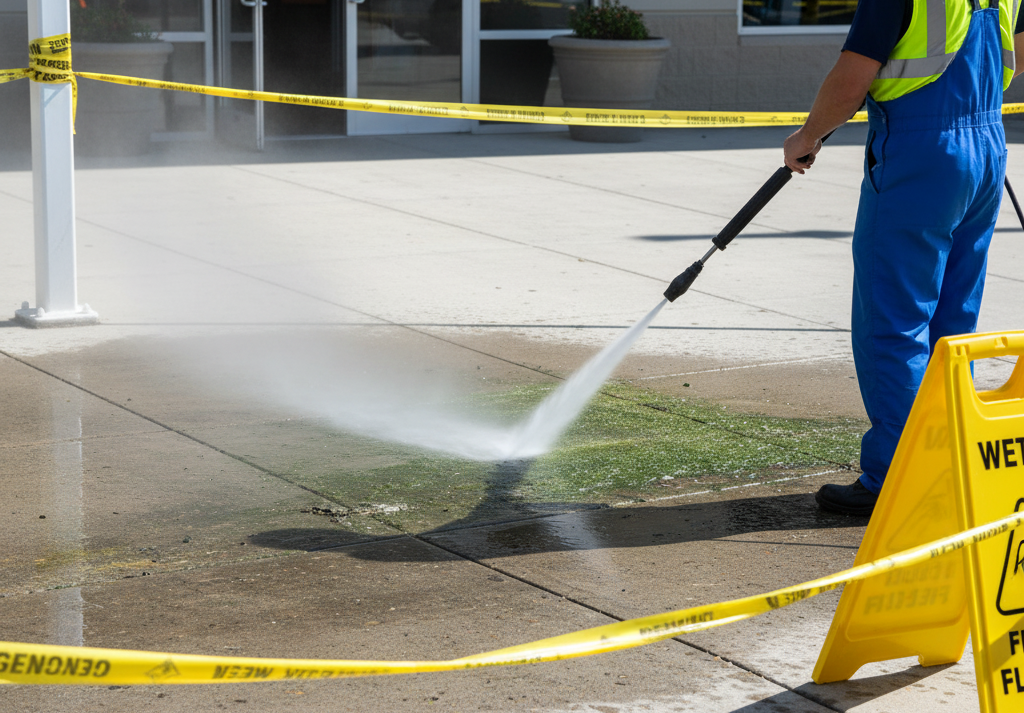
Mold spores are constantly settling on your driveway. The reason most NOLA concrete looks clean today and stained two months from now isn’t that more mold arrived, it’s that the spores already there finally hit conditions to colonize. Microbiological research shows mold can establish a visible colony on damp, porous concrete in as little as 24 to 48 hours. By the time you can see the stain, the colony is days or weeks old and has been pushing roots into the concrete pores. That timeline is why DIY surface treatments work on fresh stains and fail on old ones, the chemistry has to penetrate as deep as the staining does.
Step 1, Identify what you’re dealing with. Black streaking that follows water flow paths is mold. Green tint, especially in shaded areas, is algae. A pinkish or red tint on north-facing slabs is typically a different fungal species. All three respond to the same chemistry.
Step 2, Dry the surface and clear debris. Sweep first. Chemistry works best on a dry slab; a wet driveway dilutes the cleaner before it can dwell.
Step 3, Mix a 1:4 sodium hypochlorite solution. One part 12.5% pool shock to four parts water in a pump sprayer. Add a quarter-cup of dish soap per gallon, the surfactant helps the solution cling to the surface instead of beading off.
Step 4, Apply and dwell. Spray evenly. Watch for the moment the stain visibly fades and the surface still looks wet, that’s the dwell window, usually 8 to 12 minutes. Don’t let it dry on the concrete.
Step 5, Rinse with low pressure. Garden hose with a fan nozzle, or pressure washer at under 500 PSI. High pressure here is unnecessary and risks scarring the surface where the chemistry already did the work.
Repeat the cycle once on stains that don’t fully clear. If a second pass doesn’t move it, you’re past the depth a residential pump sprayer can handle and you need a soft-wash rig that meters the chemistry under pressure.

Oil is a different problem. Mold sits in the pores; oil migrates through them. The longer it sits, the deeper it goes, and high-pressure water on an old oil stain literally pushes the contamination further into the slab. The treatment order matters.
For fresh oil (under 24 hours):
For old oil (weeks or months in):
Old oil rarely comes out completely on the first poultice. Two or three applications spread across a week often produces dramatically better results than one aggressive single attempt. The same patience-driven approach is why commercial pressure washing safety standards emphasize chemistry-first and pressure-second on every stain category.
Rust from rebar bleed, fertilizer spills, or rusted patio furniture doesn’t respond to bleach or degreaser at all. It needs an oxalic acid, based rust remover. Apply per the product instructions, dwell, scrub, rinse. Don’t combine rust treatment with bleach-based mold treatment in the same session, the two reactions interfere with each other.
The same chemistry-and-runoff discipline applies to other exterior maintenance, see our note on improving workplace safety with pressure washing for the broader logic of protecting people, plants, and adjacent surfaces during cleaning. The piece on how gutter cleaning prevents costly repairs is a good companion read because clogged gutters are often the upstream cause of the recurring driveway streaks people keep trying to scrub out.
Three honest signals it’s time to stop scrubbing and call a contractor:
Diluted properly (1:4 or weaker), no. Concentrated bleach left to dry on the slab can etch the surface lightly, which is why dwell-and-rinse timing matters.
For light-to-moderate organic staining, yes, biodegradable surfactant-based cleaners work well. For deep-set mold or old oil, traditional chemistry is faster and uses less product over the long run.
Because you killed the visible colony but didn’t address the source, usually overhanging trees, leaking gutters, irrigation overspray, or an irregularity in the slab that pools water. Treat the source before you treat the symptom again.
Wait at least 48 to 72 hours for the slab to dry fully. Sealing over residual moisture traps it and creates white haze under the sealer.
The DIY guide above handles maybe 70% of residential driveway stains. The other 30%, old oil, deep-set mold on aging concrete, mixed-stain situations on decorative surfaces, need commercial-grade chemistry, hot water, and the right pressure for the surface. If you’ve already invested a Saturday and the stain is still there, more bleach won’t change the outcome. Send a photo of the stain and we’ll tell you honestly whether it’s worth a service call or a different approach, no quote, no pressure, just a clear answer.
 By Admin
  Jan 29, 2026