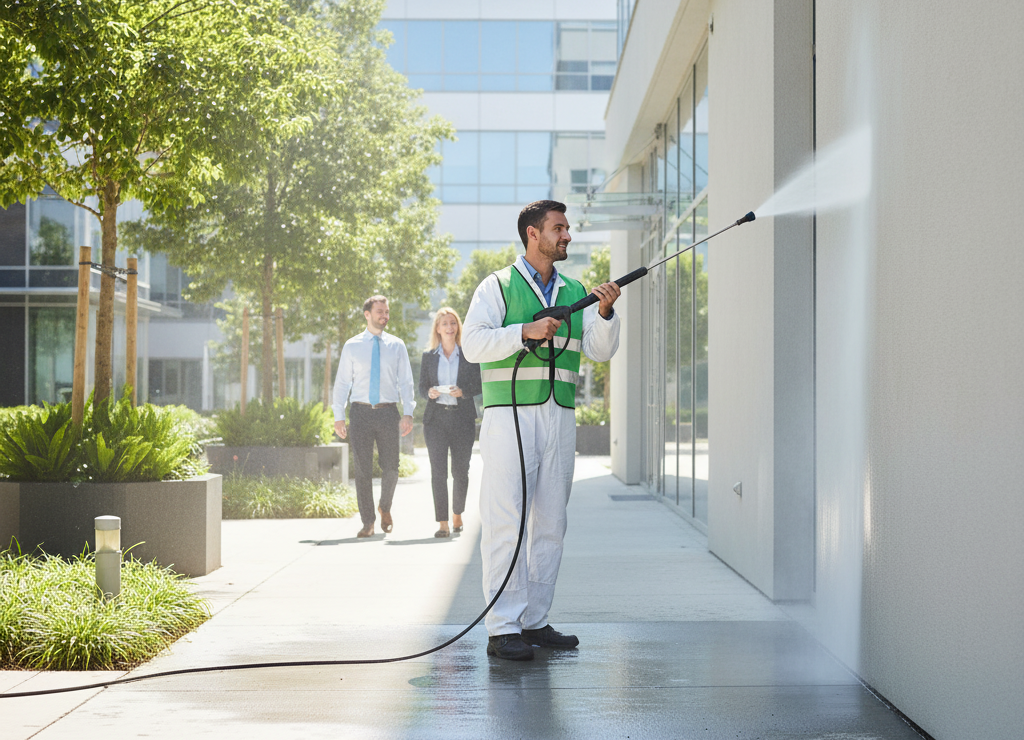
On a New Orleans commercial property, foot traffic sets the cleaning schedule more than the calendar does. A restaurant entrance on Magazine Street or a busy Metairie shopping center soils in weeks, while an office entry with a few dozen visitors a day can go months. Our humidity then speeds up whatever the traffic leaves behind, turning spilled drinks, food, and tracked-in dirt into dark stains and slick patches on walkways, facades, and parking areas. The factors below help you set a schedule, and our commercial pressure washing service keeps metro properties on it.
Table of Contents
- Key Takeaways
- Determining Your Pressure Washing Frequency
- 1. By Industry
- 2. By Material
- 3. By Location
- 4. By Traffic
- 5. By Season
- The Value of Consistent Cleaning
- Asset Protection
- Brand Image
- Public Safety
- Why Professional Assessment Matters
- Custom Schedules
- Proper Techniques
- Get Those Commercial Areas Spotless With Pressure Washing
So when talking about pressure-washing a commercial property, one might ask, “How often should pressure washing be done?” Traditionally, most standard business establishments benefit from pressure washing once or twice a year.
However, commercial spaces with heavy foot traffic, such as storefronts, sidewalks, and parking lots, often require more frequent cleaning. Regular washing keeps these areas visually appealing and prevents long-term surface damage.
For detailed information on pressure washing, contact us at Big Easy Pressure Washing.
Key Takeaways
- Decide your pressure washing schedule based on your industry. High-traffic sectors such as restaurants or healthcare might need more frequent cleanings, while office buildings can take a lighter approach.
- Think about your building materials to prevent harm. Soft wash if you’re cleaning something delicate like wood or paint, and higher pressure for things like concrete or brick.
- Consider things like traffic pollution, Gulf humidity, or lighter buildup on quieter sites. Tailor cleaning schedules to keep your property in prime condition.
- Take into consideration foot traffic and seasonality. High-traffic entryways or parking lots require consistent care and seasonal cleanings to target particular weather debris.
- Frequent pressure washing safeguards your property. It avoids permanent damage, improves visual appeal, and helps meet cleanliness and safety regulations.
- Expert evaluations customize washing treatments. An experienced crew brings the right methods and tailored timing, reducing hazards and maximizing the longevity of your property.
Determining Your Pressure Washing Frequency
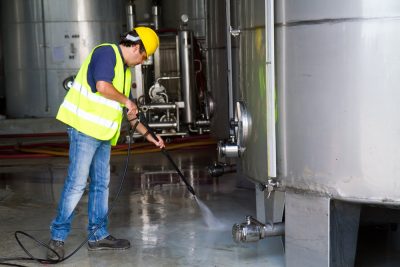
Commercial property pressure wash frequency varies with the industry, building materials, the environment, and traffic. Customize a cleaning schedule that makes all the above important in keeping you clean, safe, and curb-appealing, without cutting into the lifespan of your property.
1. By Industry
Food and medical businesses require regular cleanings to meet sanitation standards, which could mean monthly overall cleaning in areas like kitchen hoods. Heavy industrial plants may require quarterly cleans due to grime, while offices might only need biannual cleanings.
High-traffic commercial places benefit from monthly or quarterly washing to maintain their good looks.
2. By Material
The kind of building material influences the use and frequency. Many times, soft washing techniques are used on wood and stucco, which may require cleaning only once or twice a year.
Concrete is a much harder structure and can handle pressure washing every three months, while porous materials need more frequent cleaning due to dirt accumulation.
3. By Location
Where a property sits in the metro changes how fast it soils. A storefront on a busy corridor like Veterans Memorial Boulevard in Metairie picks up road grime and exhaust film faster than an office on a quiet side street. Buildings under big oaks stay damp longer and grow mildew on shaded walls and walks. Frontage in the French Quarter, the CBD, and other walkable districts takes spills and crowds that a suburban strip center rarely sees.
4. By Traffic
Main sidewalks and parking lots need weekly or monthly cleaning. Access to other areas may have to be cleaned only once every quarter. Cleaning schedule adjustments become possible with the monitoring of traffic patterns.
5. By Season
Seasons here don’t follow the northern script. Spring brings heavy oak pollen and leaf drop that stain walks and parking areas. Summer brings afternoon thunderstorms and the fastest mildew and algae growth of the year. Hurricane season can leave debris and silt behind after a storm, and the mild months at the end of the year are the easiest time to book a deep clean before Carnival season and spring festivals bring crowds back.
On top of the foot-traffic schedule above, most metro businesses add a deep clean before spring, extra spot cleaning on shaded walks through summer, and a check after any named storm passes through.
The Value of Consistent Cleaning
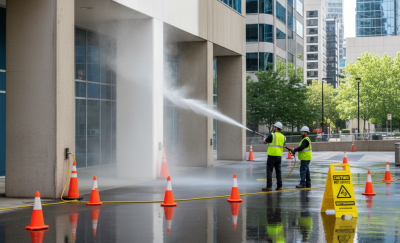
Perceptions of Pressure washing for the commercial property in terms of appearance, safety, and longevity. Apart from good looks, it also protects assets and holds safety and sanitation regulations, thus making it vital in property management.
Asset Protection
Pollutants like dirt and mold can damage building materials, and these types of damage often lead to costly repairs. Periodic pressure washing keeps these substances off surfaces like concrete, metal, and paint before they cause permanent damage.
For example, cleaning painted surfaces prevents grime buildup that could lead to peeling or cracking. Addressing these risks early with scheduled maintenance protects your investments and helps avoid expensive restoration.
Brand Image
A clean property signals a well-run business. An inviting exterior is the first marketing step toward a positive first impression for customers and reinforces professionalism. A clean storefront attracts customers, and a spotless office creates confidence in clients.
Dirty appearances, however, can drive people away. Regular cleaning is important for first impressions because people rely on dependability and attention to detail, which helps nurture customer loyalty.
Public Safety
Pressure washing keeps sidewalks, parking lots, and entryways free from slippery algae or grease that can cause accidents.
It also helps purify the air by removing mold, dust, and allergens, improving overall air