Exterior Cleaning Guide
How to Clean Composite Decking
Composite does not rot, but it does grow mould in its surface texture, and it is easy to void the warranty by cleaning it like timber.
Composite does not rot, but it does grow mould in its surface texture, and it is easy to void the warranty by cleaning it like timber.
Composite decking is wood flour bound in plastic. The plastic keeps water out, so the board does not rot or splinter the way timber does. What it does not do is stop organic growth. Pollen, leaf litter, and airborne spores settle into the embossed grain pattern, and in a humid climate that film turns green. The board underneath is fine; the growth is sitting on it.
That distinction matters, because it means the job is a cleaning job, not a restoration job. There is nothing to sand back or re-stain, and treating composite like timber is how people damage it.
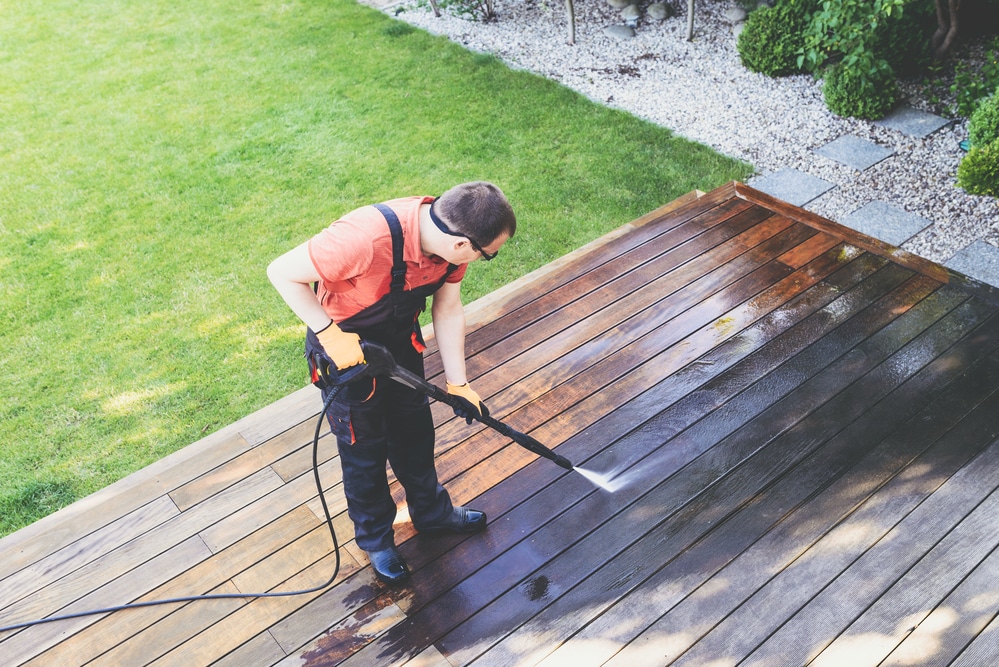
This is where most composite decks get ruined. High pressure melts and furs the plastic surface, leaving a permanently rough patch that then holds dirt worse than the rest of the board. The damage does not always show while the deck is wet, which is why people keep going and only see it once it dries. Most manufacturers cap pressure well below what a domestic machine puts out and several void the warranty for pressure damage, so check your board maker guidance before anything else.
If you do use a machine, use a wide fan tip, keep it well back, stay moving, and work along the length of the board rather than across it. The safer route is a soft wash: low pressure, and a cleaning solution doing the actual work.
A sodium hypochlorite solution mixed for exterior cleaning kills algae and mould at the root, which is what stops it returning within weeks. Applied at low pressure, given time to dwell, agitated with a soft brush on the stubborn areas, then rinsed. Rinsing thoroughly matters more on a deck than almost anywhere else, because residue left in the grain will keep working on anything planted below.
Avoid chlorine bleach mixed by guesswork, avoid anything abrasive, and avoid stiff wire brushes. The embossed grain that makes composite look like timber is exactly what a wire brush destroys.
Grease from a barbecue needs a degreaser, not an algae solution. Tannin marks from leaf litter or planters need an oxygenated cleaner. Rust from a furniture foot is an acid job. Trying to handle all of them with one product is why decks come out patchy.
Most composite decks in this climate need attention once a year, and the shaded side always needs it before the sunny side. Clearing leaf litter out of the board gaps through autumn does more than any product, because trapped damp debris is where the growth starts. Move planters occasionally so the spot underneath dries out.
We soft wash composite rather than pressure it, and we check the board manufacturer guidance before choosing a method. Call (504) 688-3995 for a free written estimate.
In a humid climate the answer is driven by shade and tree cover far more than…
Read the guideBrick tolerates more pressure than most exteriors, but the mortar between it does not, and mortar…
Read the guideThose dark streaks are a living algae feeding on the limestone filler in your shingles, which…
Read the guideFree written estimate before any work starts.