How Often Should You Pressure Wash Your Driveway in New Orleans?
Quick Answer: Most New Orleans driveways need a thorough pressure wash every 6 to 9 months, more often than the once-a-year advice written for drier climates. The reason is local: a long humid season plus heavy oak pollen, mildew growth, and frequent rain creates organic staining faster than drier climates. Heavily shaded driveways, properties under live oaks, and homes near the lake often need quarterly cleanings to keep up.
Plenty of New Orleans driveways go too long between cleanings, and not because anyone is lazy. The standard “once a year” advice you’ll find on most national pressure washing sites is calibrated for Phoenix and Denver, not Gulf Coast humidity. The real schedule for NOLA is on a different curve. Here’s the cadence that actually works for our climate, broken down by season instead of by anniversary.
The NOLA Driveway Cleaning Calendar
Think of driveway maintenance the same way you think about gutter cleaning, by what’s happening outside, not by what month it is. Here’s the seasonal rhythm most local properties follow:
February to March: The Spring Reset
This is the highest-impact cleaning of the year. Winter rains have driven oak pollen, leaf tannins, and mildew deep into concrete pores. Mardi Gras parades leave king cake crumbs, beads, and street grime if you’re on a route. Cleaning now sets the visual baseline for the entire summer entertaining season.
June to July: The Mildew Check
By midsummer, the afternoon storms and heavy humidity have made organic growth visible again, that telltale dark green or black film along driveway edges and shaded sections. A targeted soft wash now is faster and cheaper than waiting until it spreads across the whole slab.
October to November: The Pre-Holiday Polish
Football tailgate parties, family visits over Thanksgiving and Christmas, holiday photos. October falling leaves and acorns leave tannin stains that set quickly on damp concrete. A late-fall cleaning carries you cleanly into the new year.
Optional: April or August Spot Treatment
For homes with heavy tree cover or well-trafficked drives, a quick mid-season spot wash on the worst sections (typically the apron and the area under the canopy) keeps the full re-clean cycle from getting overwhelming.
Six Factors That Tighten Your Schedule
The 6 to 9 month average is a starting point. These factors all push you toward the shorter end of the range, or into quarterly territory:
- Tree canopy directly over the drive. Live oaks especially. The constant leaf litter, pollen, and bird droppings speed up organic staining.
- North-facing or full-shade driveways. Slabs that never see direct sun stay damp longer, and damp concrete grows mold within 24 to 48 hours.
- Low or poorly drained spots. Anywhere rainwater sits after a storm keeps the slab damp longer and feeds organic growth.
- Heavy daily traffic. Multi-vehicle households with daily in-and-out, work trucks that drip, or visitors that park on grass.
- Older concrete with open pores. Concrete more than 20 years old that has never been sealed absorbs stains and dirt faster than newer or sealed concrete.
- Pets and outdoor entertaining. Pet waste, dropped food, and regular cookouts contribute organic load that mildew loves.
If you check three or more of those boxes, plan on a quarterly schedule. Two boxes, twice yearly. One or none, annual is fine. The same logic shows up in our breakdown of how often you should pressure wash a commercial property, where traffic and exposure drive cadence the same way.
Five Warning Signs You’ve Already Waited Too Long
- Visible black streaking that extends in the direction water flows when it rains
- A green or yellow tint along the edges that doesn’t rinse off with a hose
- Tire tracks that show up clearly because the rest of the slab has darkened
- The driveway looks dramatically lighter for a 12-inch radius around any spot you’ve recently swept or pressure-rinsed manually
- Visitors compliment your house but you can’t remember the last time anyone mentioned the front of the property looking “fresh”
If two or more of those describe your driveway right now, you’re past due. The piece on 5 signs your commercial property needs exterior pressure washing covers the residential equivalents in detail, and our gutter cleaning piece shows how organic buildup escalates into actual damage when ignored.
Slip Safety on a Shaded New Orleans Driveway
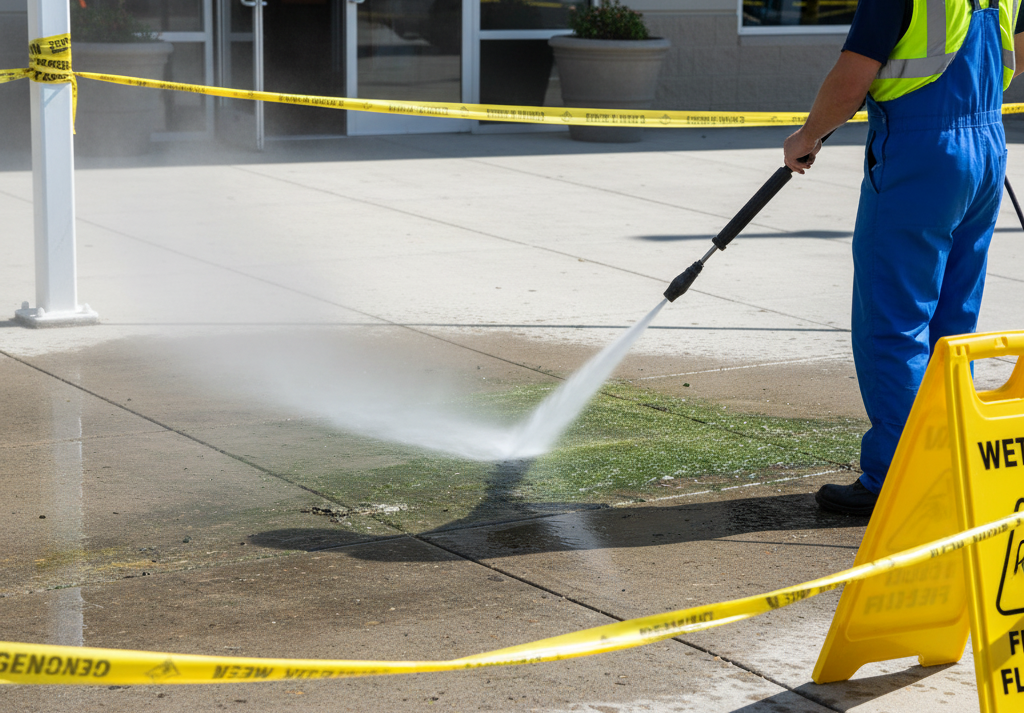
Algae is a grip problem before it’s a looks problem. The thin green film on a shaded slab turns slick the moment it’s wet, and here that means after the afternoon thunderstorms that roll through from late spring into fall, plus the morning dew that keeps north-facing concrete damp for hours. The worst spots are predictable: the walk from the driveway to a side door, the apron under a tree canopy, and the low corner where water sits after rain.
A quick test tells you where you stand. Wet a small patch with the hose and drag the sole of a sneaker across it. If it skids on the shaded strip but grips on the sunny one, those sections are ready for a soft-wash treatment now, even if the rest of the driveway can wait for its next scheduled cleaning. Steps and sloped ramps deserve the same check, and our notes on driveway cleaning safety precautions cover how to handle the surface while it’s wet.
Why a Recurring Plan Costs Less Than One-Off Cleanings
Here’s what most homeowners miss. A driveway that gets cleaned every 9 months needs a lighter clean each visit. A driveway that waits 24 months, when the staining is severe, takes more work per visit because it requires pre-treatment, longer dwell times, and sometimes a second pass. What each visit costs depends on square footage, surface, access, and how much staining has built up, so ask for a quote on both schedules before assuming the longer gap saves money. The recurring schedule also keeps your property looking maintained the entire time, while the every-other-year approach means your driveway is visibly dirty for 18 of every 24 months. Ask whether a recurring plan locks in your rate.
Frequently Asked Questions
What’s the absolute minimum cadence I can get away with?
For most NOLA driveways, once every 12 months is the floor. Less than that and organic staining will set permanently into the concrete pores, requiring restoration-level cleaning that costs significantly more.
Can I just hose it off myself between professional cleanings?
Yes, and you should. A garden-hose rinse every few weeks during heavy pollen or after storms will extend the time between professional cleanings noticeably. Just don’t expect a hose to handle anything ground-in.
Does sealing my concrete change the schedule?
It does. A properly sealed concrete driveway can stretch to 12 to 18 month intervals because the sealer prevents stains from penetrating the surface. Plan on resealing every 3 to 5 years.
Is winter too cold to pressure wash in New Orleans?
No. Our winters rarely sit below freezing for long, so there’s no real off-season here. Late February is actually the most popular cleaning window because the weather is mild and the goal is a clean baseline before spring.
Lock In a Schedule Before You Forget About It
The hardest part of driveway maintenance isn’t the cleaning, it’s remembering to book it. Most homeowners think about it twice a year (when it’s filthy and after they’ve already paid to fix it) and never in between. A recurring schedule takes the decision off your plate entirely. Pick a cadence that matches your property’s exposure, and we’ll show up on the calendar without you having to call. Set up your maintenance schedule here and choose quarterly, twice-yearly, or annual, we’ll handle the reminders, the seasonal timing, and the price-locked rate.