It is not dirt, and it is not the roof failing
The black streaking running down an asphalt roof is a blue-green algae commonly called Gloeocapsa magma. It is airborne, it lands on the roof, and it feeds on the limestone filler used in asphalt shingles. It holds moisture, which is why it thrives on the elevation that stays damp longest and why it is worst in humid climates.
The pattern gives it away. Streaks run downward from the ridge because rainwater carries spores down the slope, and they usually stop dead at a dormer or a chimney where the water path breaks. That is a growth pattern, not a staining pattern, and it is the reason north-facing and shaded slopes go dark first while the sunny side stays clean.
Why it is worth removing
Appearance is the obvious reason, and on a roof visible from the street it is usually the deciding one. Beyond that, the algae mat holds moisture against the shingle surface and darkens the roof, and where it goes untreated long enough, lichen and moss follow. Those do cause damage, because lichen roots into the shingle surface and moss lifts the shingle edges and holds standing water. Algae is the early stage of a problem worth stopping.
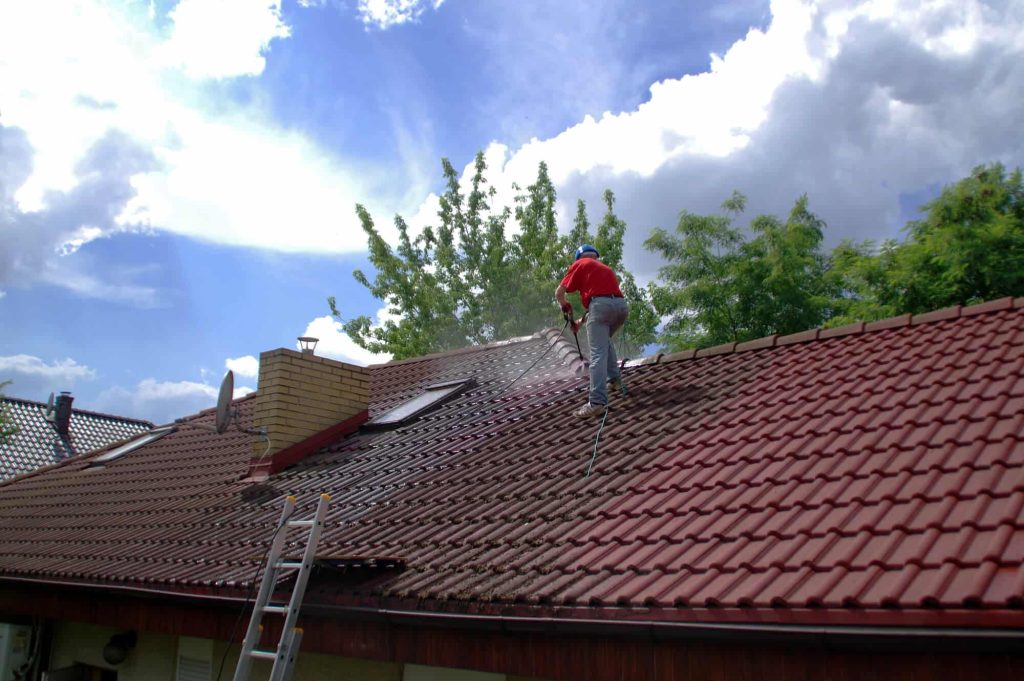
Do not pressure wash it
This is the single most damaging thing done to roofs. Asphalt shingles are protected by a layer of mineral granules embedded in the surface. Those granules are the UV protection and they are what gives the shingle its life expectancy. High pressure strips them off in quantity, which visibly shortens roof life and voids most manufacturer warranties. It also drives water up under the shingle courses.
The tell is granules in the gutters and at the bottom of the downspout after a wash. By the time you see that, the damage is done and it is not reversible.
Soft washing is the method
A roof is cleaned with a cleaning solution applied at low pressure, given time to work, then rinsed gently. The solution kills the algae rather than removing it by force, and the roof continues to lighten over the following days as rain carries the dead growth off. Expecting a roof to look finished the moment the crew leaves is the most common misunderstanding: the result develops over a week or two.
Protecting what is below
Roof cleaning solution running off into planting is the main risk to the property, so plants get wet down before, protected during, and rinsed after. Gutters and downspouts direct the runoff, so where it discharges matters.
Keeping it off longer
Trimming branches that shade the roof helps more than anything else, because the algae needs the damp that shade preserves. Zinc or copper strips fitted near the ridge release trace metal ions as rain runs over them, which suppresses regrowth on the slope below.
Having it done
We soft wash roofs and never pressure them. Call (504) 688-3995 for a free written estimate.